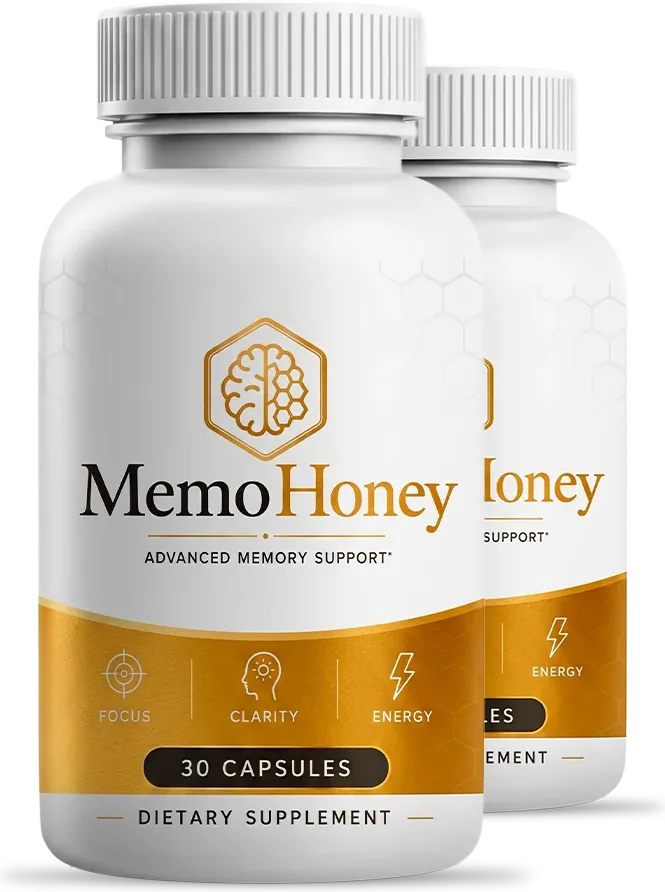
The MemoHoney Capsules arginine dose on the label is two lines, L-arginine (base) at 200 mg and L-arginine AKG 2:1 extract at 200 mg, which we add up to 400 mg of listed arginine ingredients per capsule1.
The total is our arithmetic, not a figure printed on the bottle, and the AKG line is a compound, so it is not 200 mg of arginine itself. This post sets 400 mg on a ladder of amounts from food and from NIH sources. It claims no effect, and we found no study of MemoHoney. For the ingredient itself, see our L-arginine page.
01What does the label print for arginine?
The label prints two separate arginine lines per one-capsule serving: L-arginine (base) 200 mg and L-arginine AKG 2:1 extract 200 mg, both with no Daily Value established1.
Two lines are easy to misread. The first line is arginine itself. The second is arginine paired with another molecule, so the panel weight covers the whole compound. Adding 200 and 200 gives 400 mg of arginine ingredients, which is the figure we use as the upper reading. The true arginine content of the AKG line is lower, and the label does not split it.
The suggested use is one capsule daily with 8 oz of water, and the caution says not to exceed the recommended dose1. A bottle holds 30 capsules, so 12,000 mg (12 g) of arginine ingredients sit in a bottle by our arithmetic. That is a bottle total spread over 30 days, not a daily amount.
02How does 400 mg compare with food and studied amounts?
Set against the figures NIH gives, 400 mg is a small fraction of both a typical diet and the amounts used in studies.
| Amount | What it is | Source |
|---|---|---|
| 400 mg | Arginine ingredients in one capsule (our sum) | Label1 |
| 4 to 5 g a day | Typical diet | NIH2 |
| 2 to 10 g a day | Range used in most studies | NIH2 |
| Up to 9 g a day | Appears safe for several weeks | NIH2 |
| 9 to 30 g a day | Side effects reported: diarrhea, nausea, slightly lower blood pressure | NIH2 |
Our arithmetic: 400 mg is one fifth of the 2 g low end of studied amounts, and about 8 to 10% of a typical diet. These are comparisons of numbers. They do not say the capsule does or does not do anything, and the studies were mostly about exercise, not this product2.
03Does a small amount mean it is safe for everyone?
No. A small amount of arginine can still matter if you take certain medicines or have certain conditions, and only your doctor or pharmacist can judge that.
MedlinePlus lists interactions with blood pressure medicines, diabetes medicines, blood thinners, sildenafil and potassium-sparing diuretics3. It advises against arginine after a recent heart attack, notes that kidney disease may raise potassium, and says to stop at least 2 weeks before scheduled surgery, so ask your surgeon3.
- Recent heart attack or heart disease: ask first.
- Pregnant or nursing: the label says consult a physician1.
- Under 18: the label says consult a physician1.
- Any known medical condition: the label says consult a physician1.
None of this is a reason to change, skip or stop a medicine. It is a reason to ask first.
04What happens if you stack arginine products?
Stacking products adds their arginine together, and the label's own caution is not to exceed the recommended dose of one capsule a day1.
Many sports and wellness products list arginine, and so do some protein powders. If you use one next to MemoHoney, your total is the sum of every label. Write each amount down, as you would for niacin. NIH describes side effects such as diarrhea and nausea at 9 to 30 g a day, which is far above one capsule but reachable with several products at once2.
We also cannot tell you how your other products interact with the MemoHoney panel, since each one is its own label. A pharmacist can add them up with you and check them against your medicines, and NIA suggests keeping one written list of everything you take4.
05Who should talk to a doctor about arginine first?
Anyone with heart disease, kidney or liver disease, planned surgery, or a regular medicine from the lists above should speak to a doctor or pharmacist before the first capsule.
The same goes for memory worries. Memory changes deserve a doctor visit first, because many causes are treatable, including medicine side effects and thyroid problems5. NIH and NCCIH do not rate arginine for memory, and we found no study of MemoHoney6.
If something feels wrong after taking any supplement, you can report it through FDA MedWatch7. Our safety page and medications page list the full set of groups to ask about.
Safety: MemoHoney is sold for adults. Its label lists L-arginine, L-citrulline, beta-alanine, niacin and calcium, and says that pregnant or nursing women, anyone under 18 and anyone with a known medical condition should consult a physician first. Ask your doctor or pharmacist before use if you had a recent heart attack, take blood pressure medicine, a blood thinner or any other medicine, have kidney disease or have surgery planned. Never change a prescribed medicine on your own. Memory changes that worry you deserve a doctor visit first, because many causes can be found and dealt with.
Frequently asked questions
How many milligrams of arginine does MemoHoney list per capsule?
Two lines, 200 mg of L-arginine (base) and 200 mg of L-arginine AKG 2:1 extract, which we add up to 400 mg of arginine ingredients. The sum is our arithmetic.
Is the MemoHoney arginine dose the same as in studies?
No. By our arithmetic, 400 mg is one fifth of the 2 g low end of amounts studied, and those studies were mostly about exercise.
Can I take more than one MemoHoney capsule a day for more arginine?
The label says one capsule daily and not to exceed the recommended dose. Ask your doctor or pharmacist about anything beyond the label.
Does the MemoHoney arginine amount matter if I take blood pressure medicine?
It can. MedlinePlus lists blood pressure medicines as an arginine interaction, so ask your doctor or pharmacist first and do not change your medicine.