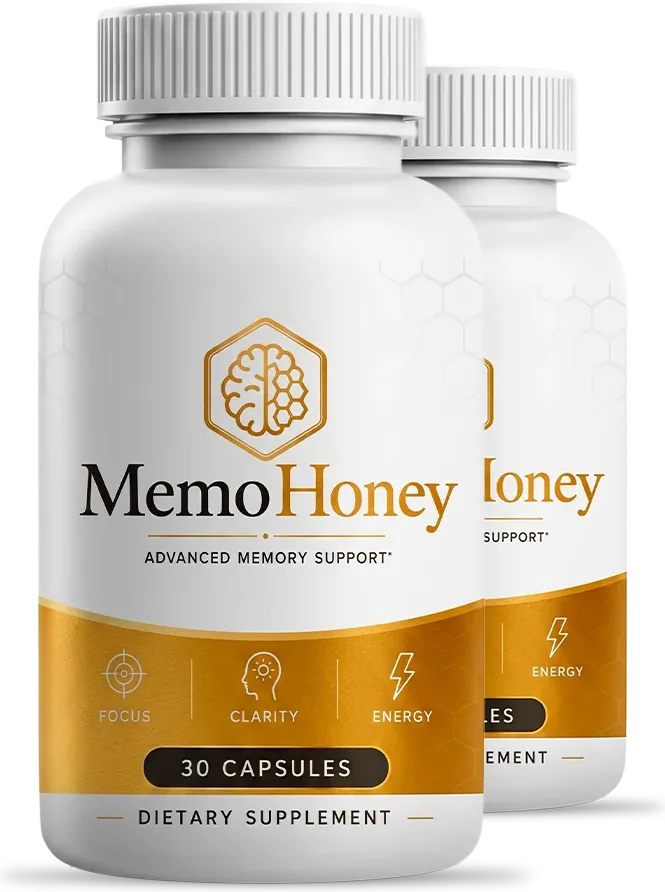
MemoHoney Capsules and memory are linked by one phrase: the front label prints "ADVANCED MEMORY SUPPORT*", which is the seller's own wording, not a study result1. We could not find any published study of MemoHoney itself, so this page cannot tell you that the capsules do anything for memory.
What we can do is set out what the label shows, what the National Institute on Aging (NIA) and the National Center for Complementary and Integrative Health (NCCIH) say about forgetfulness, and when a memory worry should go to a doctor before any supplement. If you or someone close to you has noticed changes, that visit is the most useful first step.
01What does "ADVANCED MEMORY SUPPORT*" mean on MemoHoney Capsules?
It is a marketing phrase chosen by the seller, printed on the front label next to icons marked "FOCUS", "CLARITY" and "ENERGY"1. The asterisk sends you to the FDA statement on the back of the bottle.
That statement exists because wording like this is a structure/function claim. The FDA does not review or approve such claims before a product is sold. So the phrase tells you what the seller wants to say about the product. It does not tell you what any test found.
The panel itself lists seven lines per capsule1:
- Niacin, 7.5 mg NE (47% DV)
- Calcium (as calcium carbonate), 18 mg
- L-Arginine (base), 200 mg
- L-Arginine AKG 2:1 Extract, 200 mg
- L-Citrulline HCl, 100 mg
- L-Citrulline Malate, 100 mg
- Beta Alanine, 40 mg
For the full panel, see our label walkthrough and the ingredients overview.
02Has MemoHoney Capsules been studied for memory?
No. We searched and found no published study of MemoHoney Capsules, for memory or for anything else. Without one, nobody can honestly say what the product does at its label amounts.
The panel ingredients do appear in public health sources, but mostly in other contexts. NIH fact sheets discuss arginine, citrulline and beta-alanine mainly in studies of exercise and athletic performance, arginine in blood-vessel uses, and niacin and calcium as nutrients. None of those sources rates these ingredients for memory.
That is not proof of anything either way. It simply means the evidence a careful reader would want, a study of this product at this amount, is missing. We would rather say that clearly than fill the gap with guesses.
03Is it normal forgetfulness or something more? What NIA says
NIA says some forgetfulness is a normal part of aging, while serious memory problems make everyday things hard to do2. The difference is often about how often something happens and how much it gets in the way.
NIA gives these pairs as examples2:
| Often part of normal aging | May be a sign of a more serious problem |
|---|---|
| Making a bad decision once in a while | Making poor judgments a lot of the time |
| Missing a monthly payment | Problems taking care of monthly bills |
| Forgetting which day it is and remembering later | Losing track of the date or time of year |
| Sometimes forgetting which word to use | Trouble having a conversation |
| Losing things from time to time | Misplacing things often and being unable to find them |
If the right-hand column sounds familiar, for you or a family member, NIA's advice is to see a doctor. This table is a guide for that conversation, not a way to rate yourself at home.
04Why should memory changes go to a doctor before MemoHoney Capsules?
Because many causes of memory problems can be found and managed, and a supplement cannot tell you which one you have. NIA lists causes a doctor can look for2:
- Head injury
- Thyroid, kidney or liver problems
- Side effects of medicines
- Depression and anxiety
- Alcohol misuse
- Sleep problems
- Low vitamin B12 or a poor diet
NIA also notes that memory problems have many causes and do not always mean Alzheimer's disease; a doctor can check3. NCCIH adds that you should not delay seeing a health care provider about memory loss4.
NIA suggests seeing a doctor for noticeable changes or for problems that last more than a few weeks. Taking a supplement first can mean losing time on a cause that has a clear answer.
05What does NCCIH say about supplements sold for memory?
NCCIH says dietary supplements are often marketed for memory, but there is no direct evidence that any supplement lowers the chance of Alzheimer's disease or dementia4. That finding covers the whole category, not one product.
NCCIH also reminds readers that some memory problems come from causes such as depression, reactions to medicines, or thyroid, liver or kidney problems, which a provider can look into4.
For MemoHoney, that leaves a simple picture:
- The front label uses memory wording chosen by the seller.
- No study of the product exists that we could find.
- The wider research on supplements for dementia, as NCCIH summarizes it, does not show a direct benefit.
If you want to see how the MemoHoney label compares with ingredients NCCIH has looked at, read our label comparison.
06Which everyday habits does NIA link with thinking and memory?
NIA describes general habits that are part of looking after cognitive health as you age5. These are not linked to MemoHoney Capsules in any way, and NIA does not present them as a promise.
- Being physically active in ways that suit you
- Managing blood pressure with your doctor
- Eating a healthy diet
- Getting enough sleep
- Staying socially connected and mentally active
Sleep deserves its own line. NIA says older adults need about 7 to 9 hours a night, and that poor sleep can bring memory problems and forgetfulness6. If you are tired most days, that is worth raising with your doctor too.
None of these steps needs a purchase, and all of them are worth talking through at a check-up.
07If you still want to try MemoHoney Capsules, what comes first?
Talk to your doctor or pharmacist before the first capsule, and bring the bottle or a clear photo of the Supplement Facts panel1. That is the step we suggest for everyone.
It matters most if you had a recent heart attack or have heart disease, take blood pressure medicine, a blood thinner, sildenafil, a potassium-sparing diuretic, diabetes medicine or tuberculosis medicine, have kidney or liver disease, have surgery planned, or are pregnant, nursing or under 18. The label itself asks anyone with a known medical condition to consult a physician first. Do not change, skip or stop any medicine on your own.
Our safety page and medicines page explain these points in more detail. If your doctor is comfortable and you decide to buy, check the current offer here: See the live price
08What if you are worried about a parent's or partner's memory?
Share what you have noticed kindly and privately, and offer to go to the appointment with them. A worried family member is often the first to spot a change.
A few points can make the talk easier:
- Pick a calm moment, not right after a mistake or a missed bill.
- Describe specific things you saw, rather than labels or guesses about causes.
- Remind them that NIA says many memory problems have causes a doctor can check and manage2.
- Offer practical help: booking the visit, driving, or writing the list of medicines.
If they already take MemoHoney or another supplement, add it to that list. Doctors and pharmacists need to know everything a person takes, and the bottle itself is the easiest record to bring. Try not to let a supplement purchase become a reason to put the visit off; the check-up is the part that can give real answers.
09How can you get the most from a memory check-up?
Go prepared with notes, a medicine list and, if possible, someone who knows you well. A short, clear record helps a doctor see patterns.
- Write down what changed, when you first noticed it, and how often it happens.
- List everyday tasks that have become harder, such as bills or conversations.
- Bring a list of every medicine and supplement you take, including MemoHoney if you already have it.
- Note your usual sleep, alcohol use and any recent illness, fall or stress.
- Ask what tests the doctor suggests and when to come back.
If you notice new warning signs later, our warning signs page explains when to call a doctor promptly.
Almanac card
Forgetfulness: normal aging, or a reason to see a doctor?
Ten examples from the National Institute on Aging. Sort each one, then see how NIA files it. This is a reading aid, not a test, and it does not diagnose anything.
Making poor judgments and decisions a lot of the time
Forgetting which day it is and remembering it later
Trouble having a conversation
Making a bad decision once in a while
Misplacing things often and being unable to find them
Missing a monthly payment
Losing track of the date or time of year
Losing things from time to time
Problems taking care of monthly bills
Sometimes forgetting which word to use
0 of 10 sorted
Source: NIA, Memory Problems, Forgetfulness, and Aging. NIA advises seeing a doctor about noticeable memory changes or problems lasting more than a few weeks; many causes, such as medicine side effects, sleep problems, thyroid problems or low vitamin B12, can be dealt with.
Safety: MemoHoney is sold for adults. Its label lists L-arginine, L-citrulline, beta-alanine, niacin and calcium, and says that pregnant or nursing women, anyone under 18 and anyone with a known medical condition should consult a physician first. Ask your doctor or pharmacist before use if you had a recent heart attack, take blood pressure medicine, a blood thinner or any other medicine, have kidney disease or have surgery planned. Never change a prescribed medicine on your own. Memory changes that worry you deserve a doctor visit first, because many causes can be found and dealt with.
Frequently asked questions
Does MemoHoney do anything for memory?
We cannot say that it does, because we found no published study of MemoHoney itself. The "ADVANCED MEMORY SUPPORT*" line on the front is the seller's wording, and the FDA does not review that kind of claim before sale.
Should I try MemoHoney for memory loss before seeing a doctor?
No. NIA and NCCIH both say memory loss deserves a visit to a health care provider, and many causes, such as medicine side effects, thyroid problems or low vitamin B12, can be found and managed.
Is everyday forgetfulness a reason to take MemoHoney?
NIA says some forgetfulness, like misplacing keys now and then, is a normal part of aging. If forgetting is getting in the way of daily life, see a doctor rather than relying on any supplement.
Is MemoHoney suitable for seniors with memory concerns?
Many older adults take medicines that need a check first, and memory concerns themselves call for a doctor visit. Ask your doctor or pharmacist before the first capsule and bring the label with you.
Is there any evidence linking MemoHoney to a lower chance of dementia?
There is no evidence that it can. NCCIH says there is no direct evidence that any dietary supplement lowers the chance of Alzheimer's disease or dementia, and no study of MemoHoney exists that we could find.